
In Meta Ads, targeting for B2B services isn't about finding a secret combination of interests. It means making the offer to the right people, giving the platform quality signals, and measuring what happens after the form is filled out.
For many B2B services, the eligible audience is small, the decision cycle is long, and the person seeing the ad is not always the only decision maker. Therefore, the structure of the campaign must start from the commercial problem and from the available data.
Why B2B segmentation is different
A business buyer evaluates risk, budget, implementation and operational impact. The ad needs to attract attention, but the conversion also depends on the landing page, the proof of competence, the clarity of the deliverables and the speed of response of the sales team.
Additionally, declarative data from social profiles does not perfectly describe job role or purchase intent. Very narrow segments can reduce deliverability without improving relevance.
It starts with the ideal customer profile
Before Ads Manager, document who can buy and why. A useful profile includes industry, company size, digital maturity, current issue, project value, and people involved in the decision.
Don't turn the profile into a rigid list. It is a hypothesis that must be faced with real leads and customers. If the data shows that an unexpected segment is producing good opportunities, update your message and budget allocation.
Types of audiences we can test
Wide audience with clear signals
A wider audience can work when the conversion event is implemented correctly, the volume allows for optimization, and the ad explicitly says who it is aimed at. The message and form filter out some of the irrelevant users.
Professional interests, roles and contexts
These criteria can be useful for exploration, but their availability differs by market and may change. We do not build the strategy on the assumption that a professional function or interest surely identifies the decision maker.
Custom Audiences
Custom audiences can start from visitors, interactions or own lists, if there is a legal basis and the data is used according to the terms of the platform. We do not upload purchased lists or transmit sensitive data.
Similar audiences
A lookalike audience is only valuable if the source is good. A list of unqualified forms will produce more users similar to the unqualified forms. A smaller source but associated with real business opportunities is preferable.
The message is part of the segmentation
A generic advertisement like "we grow your business" attracts very different interpretations. A good B2B message names the problem, the context and the desired outcome, without absolute promises.
- It says who the service is for and who it isn't.
- It explains what's included and what the next step is.
- Use verifiable examples and limits.
- Keep the same promise in the ad and landing page.
Landing page or instant form
Instant forms reduce friction, but can increase the number of superficial requests. A landing page takes an extra step, but it can explain the offer, the guide prices, the process and the matching criteria.
The choice should be tested against the value of the service and the ability of the qualification team. For complex projects, the quality of the information may be more important than the raw volume.
Pixel, Conversions API and Consent
Meta Pixel sends events from the browser. The Conversions API allows controlled sending of events from the server and can improve measurement resiliency. The two mechanisms must be configured with deduplication when the same event is transmitted from both sources.
Implementation must respect consent and avoid personal data in inappropriate URLs or parameters. For Docodex, Meta Ads administration is separate from the media budget, and tracking is validated before a form is treated as a result.
From form sent to qualified lead
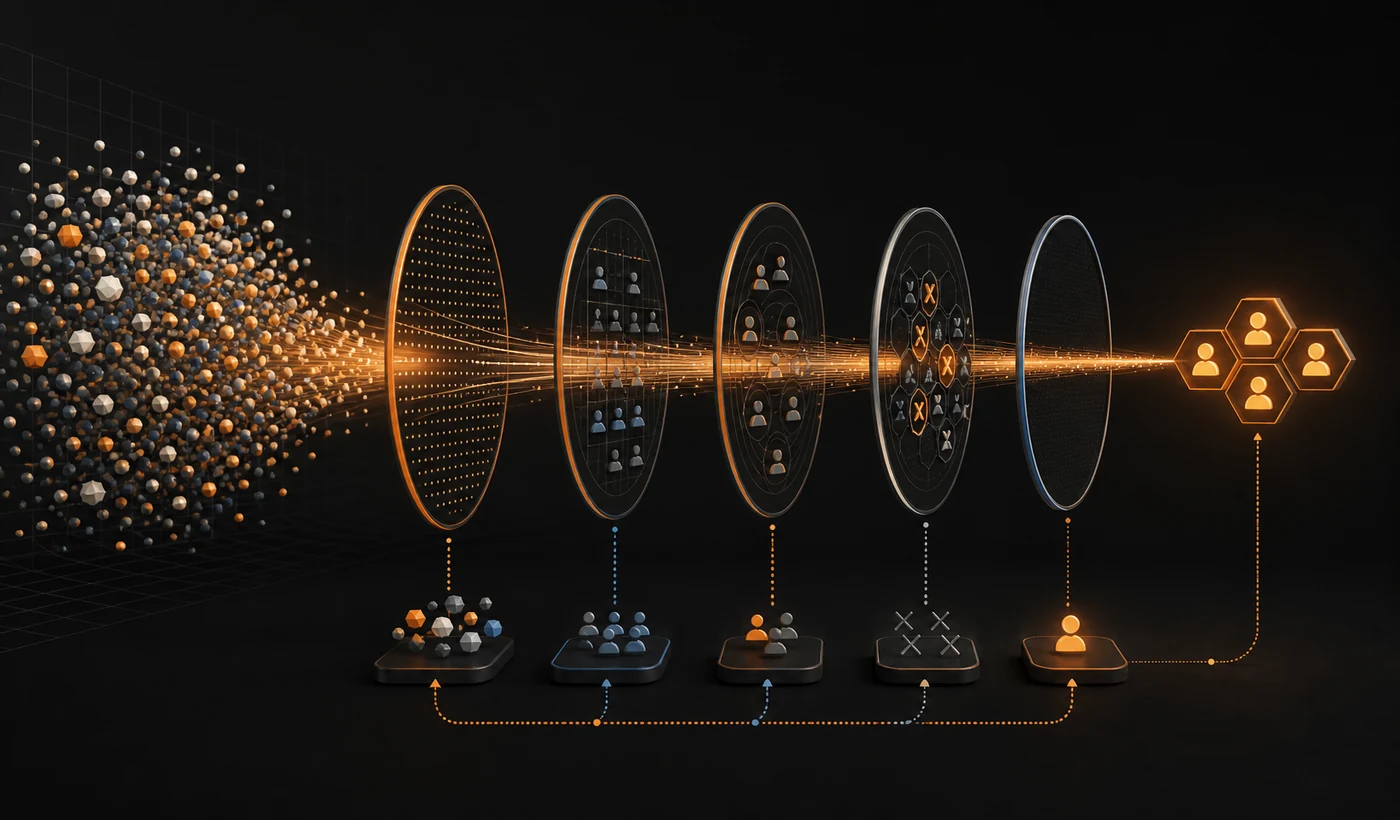
The cost per form is not enough. The principle is also valid in other channels; the guide about avoiding wasted budget in Google Ads explains the same connection between intent, landing page and measurement. For a B2B service, we progressively aim for:
- relevant visit and form start;
- valid form submitted;
- contactable and suitable lead;
- initial discussion or analysis;
- offer;
- client.
If the platform only optimizes for the first stage, it may find users who easily fill out forms, not necessarily businesses who can buy. That's why CRM or internal reporting must preserve the source and business status. The measurement foundation must also be checked technically, including through the recommendations in the guide about preparing a new website for launch and tracking.
Remarketing without waste
Remarketing should be segmented by behavior and time window. A visitor to a service page is different from someone who has already submitted a request. We exclude existing customers and recent conversions when the message no longer suits them.
Frequency, audience size, and creative should all be tracked together. A small audience can quickly become saturated, even if aggregate reporting appears stable.
A realistic test plan
- Start with an offer and a clear business objective.
- It tests for meaningful message differences, not cosmetic variations.
- Don't fragment your budget into too many ad sets.
- Write down the hypothesis, period and decision criterion.
- Evaluate leads with the team contacting them.
What we don't promise
No segmentation guarantees leads or sales. The result depends on demand, supply, reputation, creative, budget, landing page, tracking and commercial process. The role of management is to reduce waste, produce measurable learning and allocate budget based on available data.
Conclusion
For B2B services, effective segmentation is the combination of ideal customer profile, correct signals, explicit message and sales feedback. Start simple enough to learn, measure quality by form, and refine audiences only when data warrants change.